
Syracuse University School of Education Professor Sharon Dotger’s new co-edited volume will aid any educator looking for tools and collaborative teaching methods that can provide an effective method of collaborative sensemaking with students.
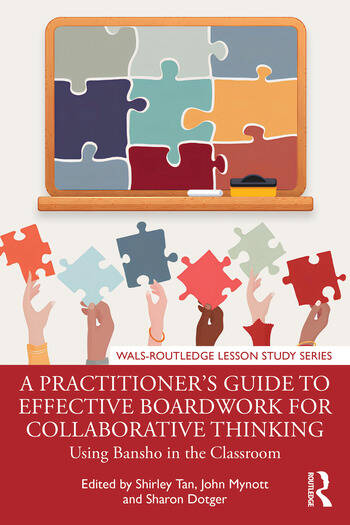 A Practitioner’s Guide to Effective Boardwork for Collaborative Thinking: Using Bansho in the Classroom (Routledge, 2026) is part of the WALS-Routledge Lesson Study Series. Joining Dotger, an expert in science education, as co-editors are John Paul Mynott, Senior Lecturer in Teacher Education and Dean for Portfolio and Programme Development at the University of Aberdeen, UK, and Shirley Tan, Research Fellow at Windesheim University of Applied Sciences, the Netherlands.
Bansho is a traditional Japanese board writing, or boardwork, practice that is now widespread throughout the world. This book is designed to deepen readers’ understanding of bansho and boardwork and learn how to use them effectively in their teaching.
“Our edited volume includes an introduction to bansho, along with multiple chapters detailing its use in multiple grade levels, content areas, and countries,” says Professor Sharon Dotger. “If you like lesson study and want to take your practice to the next level or if you are interested in building classroom communities for thinking while teaching, this book can help.”
A Practitioner’s Guide to Effective Boardwork for Collaborative Thinking also explores how bansho intersects with modern technology, including interactive whiteboards; its potential for broader adoption across educational systems globally; and the integration of bansho into teacher education programs.
Case studies and practical examples shed light on how teachers innovate with bansho in their classrooms and adapt the practice to meet the local needs of students and educational contexts.
The book includes takeaways and guidance on using bansho and, throughout, readers are encouraged to sketch their own lessons as they read and to envision bringing those ideas to life with their students.
“Bansho–organized boardwriting–is a powerful, yet little-known, secret of Japanese education,” says Catherine Lewis, Past President of World Association of Lesson Studies (WALS). “Bansho makes student thinking visible by creating a shared record of learning during a lesson, enabling students to revisit classmates’ ideas and models and build powerful new insights. Leading practitioners from around the world bring bansho to life through examples, diagrams, and their personal stories of change in practice.”