
The School of Social Work held its 27th annual James L. Stone ’62, G’64 Legislative Policy Day at the Onondaga County Legislative Chambers in downtown Syracuse on Oct. 16, 2026. The theme was “Nourishing-Equity: SNAP, WIC, and the Pursuit of Food Justice in an Unpredictable Socio-Political Context.”
State Sen. Rachel May (D-48), Syracuse Mayor Sharon Owens, Chair of the County Legislature Nicole Watts, and representatives from Food Bank of CNY, Syracuse City School District, CAP of Madison County, and Liberty Partnerships Program discussed topics in food justice and security, such as the future of government assistance programs, the work of food banks and pantries, the importance of school meal programs, and community food sovereignty.
View Photo Album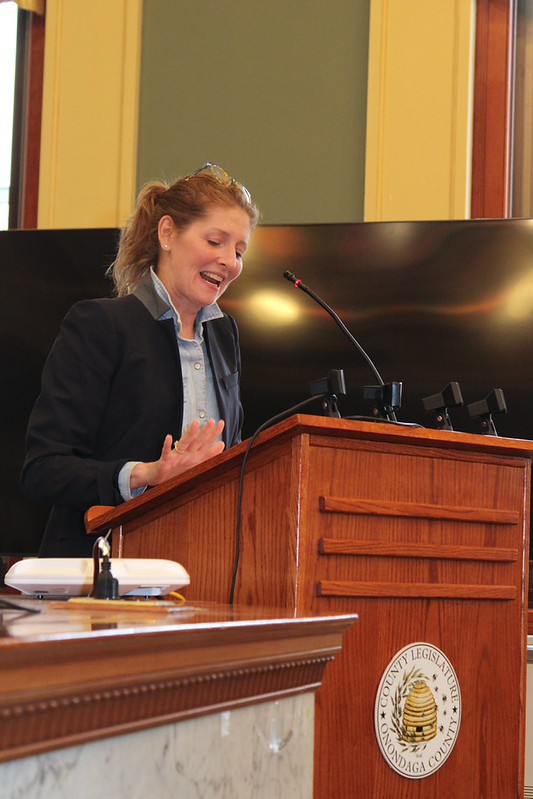
Along with Professor Joseph L. Smith, Director of Continuing Education and Professional Development, Professor Yvonne Smith (pictured), Director of the School of Social Work, helped to introduce the day’s topic—that food justice is social justice—as well as the history of Legislative Policy Day, highlighting the need for advocacy of social policy.
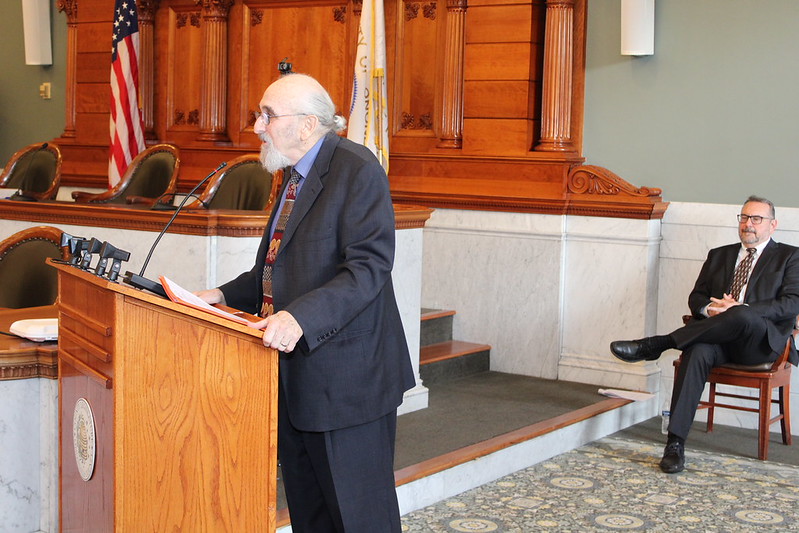
Professor Emeritus Eric Kingson, a mentee of James L. Stone ’62, G’64, offered a tribute to the late benefactor of Legislative Policy Day, who passed in August 2026. Kingson noted the late Dr. Stone’s passion for advocacy, exemplified by his time as Deputy Commissioner of the US Substance Abuse and Mental Health Services Administration.
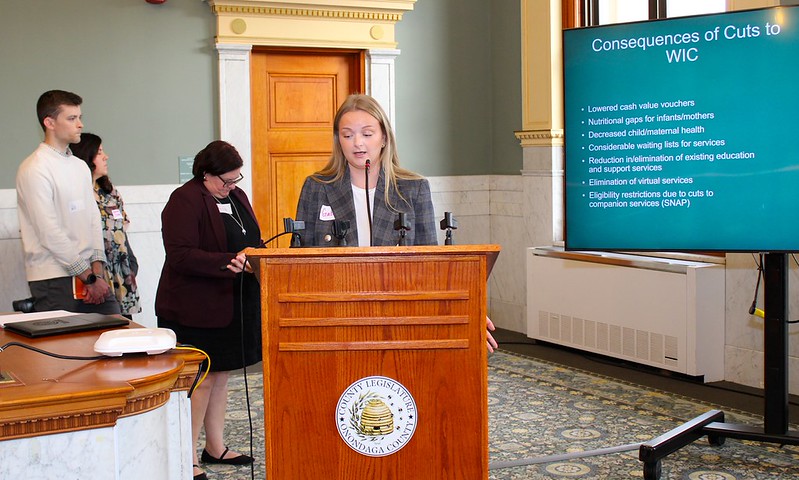
Master of Social Work students offered an overview of food security and the status of food and nutrition assistance programs: “National food security data for 2025-2026 indicate that approximately one in eight Americans—or more than 42 million people, including 16 million children—rely on federal nutrition programs to meet basic needs, and millions of households continue to experience persistent hunger.
“Some families find temporary relief through community food pantries, faith-based food ministries, or local charities. For many others, federal safety-net programs such as SNAP and WIC, together with school-based meal programs, remain the only reliable source of adequate nutrition.
“The enactment of H.R.1 (2025), together with subsequent FY2026 budget proposals, has introduced historic structural cuts to domestic nutrition programs. Federal SNAP funding has been reduced by an estimated $187 billion over the next decade, a roughly 20% reduction.”
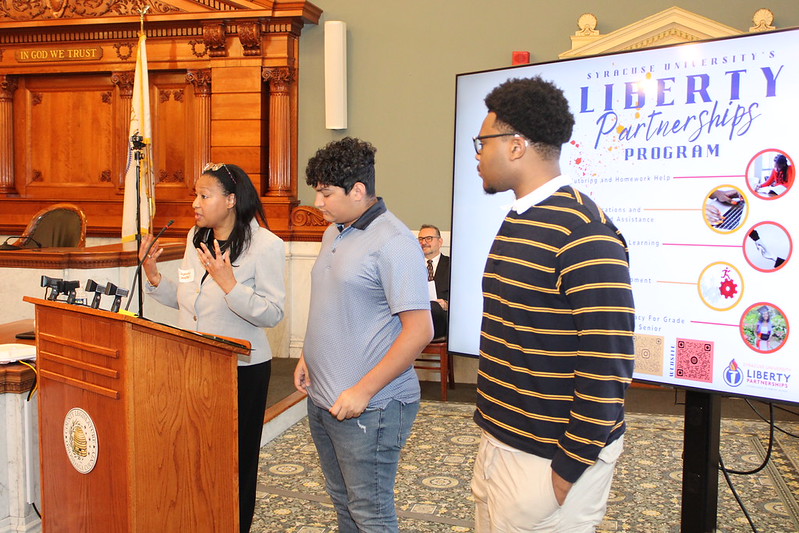
Stephanie E. Thompson, Director Liberty Partnerships Program is a New York State Education Department-funded program operating out of the Syracuse University School of Education. For 38 years, LPP has supported successful graduation from high school in the Syracuse school district, posting a 98% graduation rate in 2026, higher than the NYS average. Additionally, LPP offers an Emerging Leadership Institute and a Literacy Camp, which promote leadership and education. Thompson invited seniors from Syracuse’s Public Service Leadership Academy and Cocoran High School to share their positive experiences in the program.
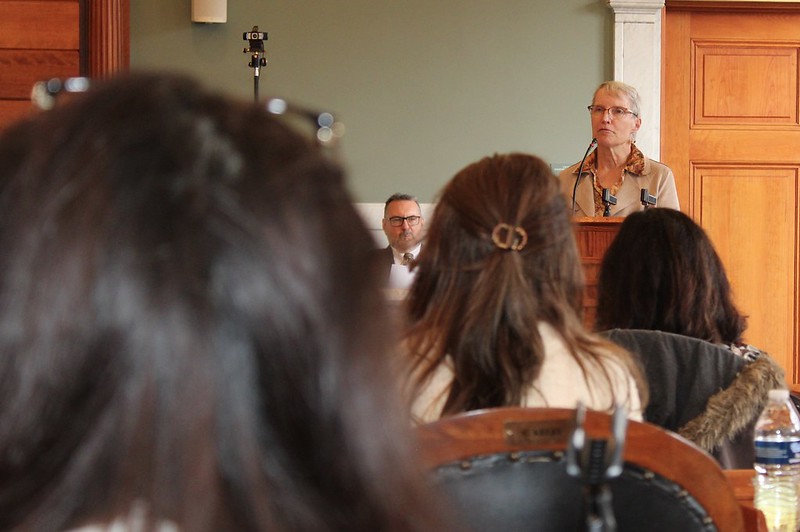
New York State Sen. Rachel May (D-48) discussed the state of food assistance and initiatives to curb the impact of federal budget cuts. May explained that cuts to the Supplemental Nutrition Assistance Program (SNAP) hurt farmers, revealed a $26 million initiative to fund special food assistance, and highlighted local co-ops, such as Toomey Abbott Market in Syracuse, which help individuals on food assistance obtain nutritious options.
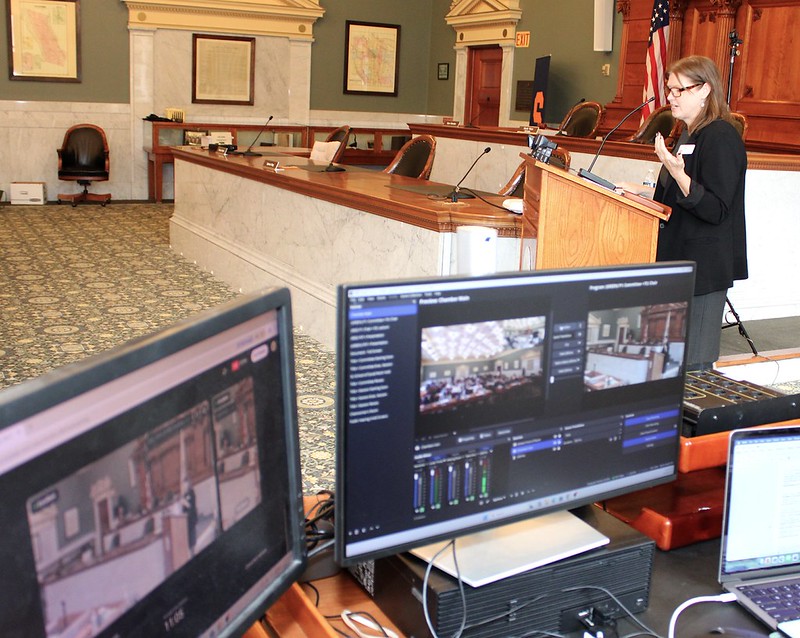
School of Social Work Director of Field Education Tracy Walker shared her experience as a Board Member for the Town of Geddes. Walker explained the need for social workers to engage in policy, politics, and public service, as even the smallest social changes can have drastic impacts.

City of Syracuse Mayor Sharon Owens joined discussed steps being taken in the city to address the current state of housing, even before additional housing is constructed. Turning to the local effects of Micron building a fabrication plant in the area, Owens declared herself “hellbent” on ensuring the city does not make the economic mistakes of the past, when large corporations left the region causing poverty and homelessness to spike.
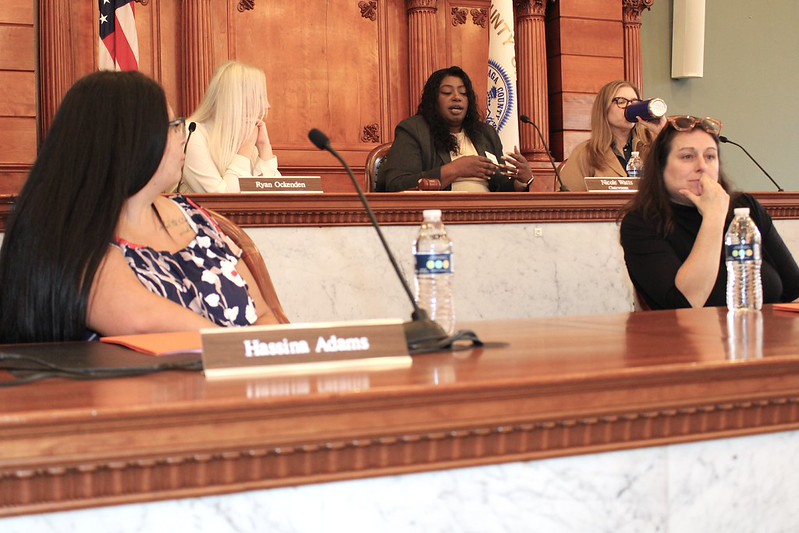
In the SNAP, WIC, and Food Assistance Panel, experts shed light on the current state of programs and the impacts of H.R.1. Panelists were Becky Lare, Vice President of Government Relations, Food Bank of CNY; Amalia Swan, Chief Community Impact Office, Food Bank of CNY; Amber Munch, CAP of Madison County; and Colleen Riley, CAP of Madison County. Professor Stefanie Pilkay moderated the panel.
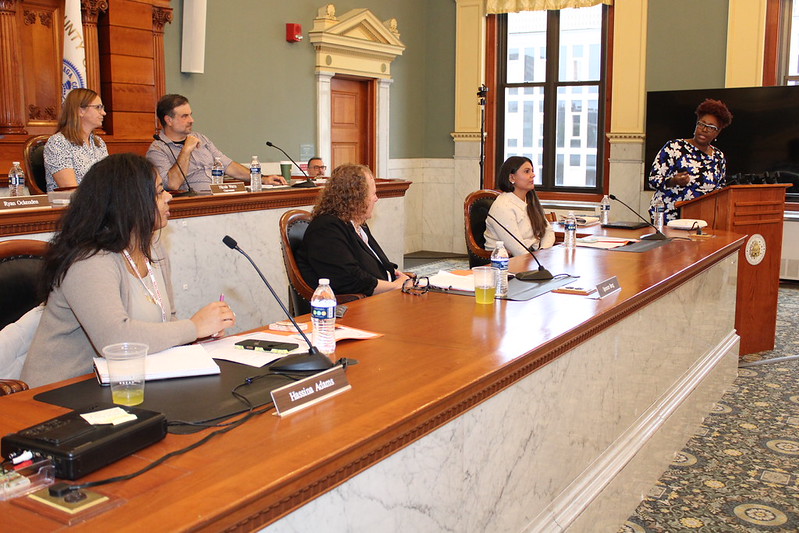
Moderated by Professor Kendra DeLoach McCutcheon, Food justice and food sovereignty were the topics of the second panel discussion. Leaders from Syracuse University, Syracuse City School District, and Lion-Hearted Services LLC shared their efforts to provide equal access to food.
At the University, researchers are investigating where food deserts are and the impact of a lack of nutrition has on humans. Members of the SCSD described their initiative to provide free breakfast and lunch to all students, as well as their creation of a meal-delivery service to feed families during the COVID-19 pandemic. Lion-Hearted Services LLC is working to create and maintain community gardens, providing payment to neighbors who will help watch over the garden.
Panelists were Frank Cetera, Lion Hearted Services LLC; Janel Milana, Allia Abughoush, and Krystal Tull, SCSD; and Maryam Yuhas, Syracuse University.
Postscript: Students Who Serve Their Community
As is sometimes the case with events such as Legislative Policy Day, at the conclusion there was leftover food from catering at breakfast and lunch. The irony of letting this abundance go to waste at an event focusing on food security was not lost on the Social Work students in attendance.
The students—including Marcus Russell ’27 and Hailey Vanish ’27—boxed up the leftovers and offered it to local people and organizations in need.
“I took food to the Salvation Army Women’s Shelter, where I currently intern, along with Alex Manseau ’27,” says Vanish. Russell handed his share of the provisions to individuals at Syracuse Rescue Mission. “I then took the rest of the food and donated it to a church near my house on Syracuse’s southside,” he adds.
Russell continues, “Legislative Policy Day was an eye-opening event. The more events such as this that are held, the more that I learn where I stand with food insecurity and what steps I can take in my professional and personal life to make a difference for my community.”
“After a full day of talking about food security and justice, seeing so much leftover food broke my heart and made me reflect on my own privilege,” says Vanish. “Although I have never had to worry about food on my table, and I am grateful to be able to serve others and use the resources I have to help those in need.
Vanish says that Legislative Policy Day “opened my eyes to the realities of the populations and communities we serve. In Syracuse, there is so much food insecurity and injustice, and we must understand how these systems work. When a basic need like food goes unmet, an imbalance ripples through every other aspect of a person’s life.”
Contributor: Will Hunter G’28