
Community partner Arc of Onondaga recently named two School of Social Work alumnae to senior positions: Alisha Lorenzo G’19 becomes Chief Program Officer, Community Services, while Sonja Gottbrecht ’09, G’10 has been promoted from Chief Operating Officer to Chief Executive Officer.
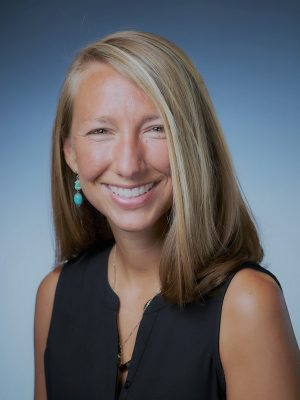 Gottbrecht received both her bachelor’s and master’s in Social Work from Syracuse University. She joined Arc of Onondaga in 2023 after serving in a variety of roles for Catholic Charities of Onondaga County, including as Chief Performance Officer.
She comes from a family with strong ties to the School of Social Work, which is now housed in the School of Education. Her father is Master of Social Work alumnus Randi Bregman G’90 and her grandfather is former faculty member Ona Cohn Bregman G’58, also a program alum.
Describe your current role and responsibilities.
As CEO of Arc of Onondaga—a non-profit that supports people with intellectual, developmental and other disabilities in Onondaga County—I am responsible for the agency’s overall direction and day-to-day performance, including residential, community, clinical, and employment services.
My role includes working with our board, leading the executive team, overseeing finances and regulatory compliance, addressing workforce challenges, and making sure our services are both sustainable and responsive to the people and families who rely on us.
How did the School of Social Work prepare you for this role?
The School of Social Work taught me to look at issues from both the individual and systems levels. I learned how policy, funding, organizational decisions and access to services directly affect people’s lives.
That perspective is central to my work today. Whether I am reviewing a policy, responding to a service concern, or making a budget decision, I think about the practical impact on the person receiving support, the staff providing it, and the larger system in which we operate.
“The School of Social Work taught me to look at issues from both the individual and systems levels. I learned how policy, funding, organizational decisions and access to services directly affect people’s lives.”
What current trends do you see in your specialty and how are you addressing them?
The most immediate issues in intellectual and developmental disability services are the direct support workforce shortage, increasingly complex medical and behavioral health needs, and uncertainty around the future of community-based services.
Recent concerns about protections under the Olmstead v. L.C. (1999) decision, along with the possibility of Medicaid cuts, could affect the supports that allow people with disabilities to live and participate fully in their communities.
At Arc of Onondaga, we are staying engaged in advocacy, strengthening staff training and clinical supports, and planning carefully so we can continue providing individualized, reliable services.
Which professors stood out for you most as a student at the School of Social Work?
Professor Nancy Mudrick stood out because of her dedication to disability rights and the way she engaged me in policy practice. She helped me understand that social workers have a responsibility not only to support individuals but also to challenge the policies and systems that create barriers.
Tracy Walker also had a lasting impact on me. I was very shy and did not speak much in seminar, and she consistently pushed me to speak up and share my ideas. That encouragement helped me build confidence in my own voice, which has been important throughout my career and especially in leadership.
What would you say to a prospective student considering social work at Syracuse University?
I would tell a prospective student to take full advantage of the range of experiences available at Syracuse University. Choose field placements that expose you to the realities of practice, take policy and administration courses even if you think you want to focus only on direct service, and build relationships with professors who will challenge you.
Social work can lead to clinical practice, advocacy, policy, program development, or executive leadership. The skills you develop—listening carefully, understanding systems, communicating clearly, and speaking up when something needs to change—will be useful in every one of those roles.