
Music Education (Preparation), M.S.

Where Musicianship Meets the Classroom.

You already know your instrument, your ensemble, and your craft, and now you want to transform your musical expertise into a teaching career. The M.S. in Music Education (Preparation) is a direct path from a music performance, composition, or theory degree to initial teacher certification. Applicants require a National Association of Schools of Music (NASM)-accredited bachelor’s degree in music but do not need a background in music education or any prior certification.

Suggested Application Deadline: January 15 | More admissions information
Join us for an info session October 13 or November 18!
If you already have initial certification, explore our M.Mus. in Music Education (Professional Certification)

Why Music Education at Syracuse?

The Music Education Preparation master’s degree is a dual program from both the School of Education and the Setnor School of Music. It meets the academic requirements for initial New York State teacher certification in Music (All Grades). Students typically complete this degree in five semesters, including one summer.

  • The best of two schools, in one degree. Students study applied music and performance with Setnor faculty and ensembles, then bring that musicianship into a School of Education curriculum built on inclusive and equitable teaching and classroom practice. Many candidates perform in or work alongside Syracuse University bands, choirs, and jazz ensembles while completing their degree.
  • Clinical simulations that sharpen your skills before you step into a school. Syracuse is at the forefront of using standardized clinical simulations as a deliberate, integrated part of teacher preparation. These live, structured, exercises replicate real classroom and school interactions, helping you identify your strengths, work through challenging scenarios, and enter your field placements with genuine confidence.
  • A genuinely inclusive approach to music teaching. This program prepares you to teach the full range of learners in today’s music classrooms, including students with disabilities, English language learners, and students from every socioeconomic and cultural background. Coursework in culturally responsive and inclusive teaching methods are built into the curriculum.
  • Faculty who are active in the field. Faculty members are professional musicians, working in the genres of jazz, choral performance, and modern band, as well as educators and researchers who investigate how students learn and how equity and inclusion is addressed by music teachers.
  • A professional community from day one. Weekly Music Educators Academy meetings, National Association for Music Education (NAfME) events, and mastrer classes connect you with Syracuse faculty and staff, area teachers, education professionals, and resident and visiting artists.
  • Outcomes that speak for themselves. School of Education graduates achieve a 94% career outcome rate, with an average starting salary of $51,175. Many go on to leadership roles in their buildings, schools, and districts.

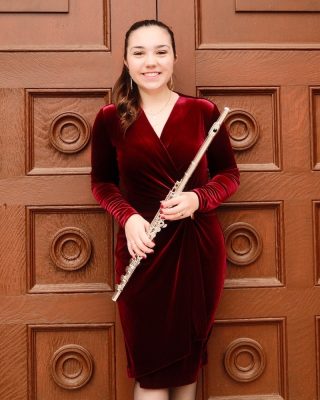
kate o'leary headshot.

“Clinical simulations gave me the invaluable opportunity to figure out how I handle situations that may cause pressure as an educator, and—during my student teaching – seeing music rooted in love, joy, and laughter and becoming a part of this learning experience reminded me how incredible and life-altering music education can be.”

—Kate M. O’Leary ’26

Who Should Apply?

This degree works for two kinds of musicians: those coming directly out of an undergraduate music program and those who have spent time in another career first and are now ready to teach.

If you hold a bachelor’s degree in music from a NASM-accredited institution, this program is your direct path from a performance, composition, or music theory background to initial NYS teacher certification, whether you are finishing your undergraduate study or have spent years performing, freelancing, or working outside music since you graduated. No audition is required to apply, and no prior education coursework is necessary.

If you already have initial certification, explore our M.Mus. in Music Education (Professional Certification).

Program at a Glance

The master’s degree in Music Education (Preparation) is a 47-48 credits program, typically completed in five semesters including one summer. Students study alongside a small cohort of fellow music education candidates, with direct access to Setnor School of Music faculty, rehearsal spaces, and ensembles.

  • Preparation for the classroom: Students take courses in graduate music education methods, psychological and sociological aspects of music, current problems in music education, literacy across the curriculum, equitable assessment for inclusive classrooms, and adapting instruction for diverse student needs. Coursework exposes you to current instructional technology and its applications to music education.
  • As a musician, you continue to grow: Students also take a graduate music history course, an introduction to research in music, advanced tonal analysis, and choral or instrumental rehearsal techniques.
  • Multiple field placements across diverse school settings: Five field placements over the course of the program give you experience in urban, rural, and suburban school settings, contact with a range of teaching professionals, and work with students of diverse backgrounds and abilities.

More information on academic requirements available in the Syracuse University Course Catalog. SOE is accredited by the Association for Advancing Quality in Educator Preparation (AAQEP).

What Our Graduates Do

Graduates begin teaching careers in public, private, and community music settings, including as:
  • Instrumental, choral, and general music teachers in elementary, middle, and secondary schools
  • Music teachers and program leaders in community music schools, after-school programs, and nonprofit arts organizations
  • Performers, conductors, composers, or music industry professionals alongside or beyond a teaching career
  • Teacher leaders, department chairs, or advocates for music education within their districts, as their careers progress
  • Scholars pursuing further study in teaching and curriculum, educational leadership, music technology, conducting, or composition