
Malawian native Lizzie Muyawa Dube holds an A.A. from Cottey College in Nevada, MO, (2007) and a B.A. in Sociology from Hollins (VA) University (2009). She graduated from Syracuse University College of Arts and Sciences in 2010 with a Certificate of Advanced Study in Women’s Studies (2010) and from the School of Education (SOE) in 2011 with an M.S. in Cultural Foundations of Education.
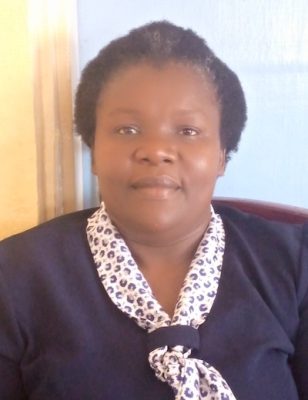 “In Malawi, I have held research and data analysis positions and then taught for three years at a private secondary school,” says Dube. “In 2017, I joined World University Service of Canada for five years as Program Officer. In this role, I supported refugee students from the Democratic Republic of Congo, Somalia, Rwanda, Burundi, and elsewhere to attain higher education degrees in Canada.”
Dube later joined the United Nations High Commissioner for Refugees as a Protection Officer: “I was a frontline responder, counseling refugees, single mothers, children with disabilities, and the elderly. Unfortunately, U.S. funding for UNHCR was eliminated, and the entire staff lost their jobs.”
Currently, Dube is creating an elementary school in Lilongwe, Malawi. “I need a financial hand in building this academy,” she says. “I have already secured land, developed a proposed budget, and written a project summary, but I need funding. If you would like to donate toward establishing the elementary school, please contact me at lizzie.dube@yahoo.com.”
Describe your current role and its responsibilities.
Right now, I am in the middle of establishing an elementary school called “Mphukira Academy,” a local Chichewa name which means “blossom” to support my area where there is only one elementary school.
Mphukira’s mission is to deliver quality education to learners of all ages, especially girls, ranging from grade 1-8, who have lagged in education in Malawi. Mphukira’s main goal is to support learners’ inquisitive search for knowledge with evidence-based methods of teaching.
“SOE wasn’t just a place where I studied, it became a community where I grew intellectually, thrived personally, and built friendships that have lasted well beyond graduation.”
How did the School of Education prepare you for this role?
My time SOE clearly gave me both the academic grounding and the practical experience to work with refugee students in meaningful ways. Being a Graduate Assistant for Say Yes to Education placed me at the intersection of theory and practice—supervising tutors, supporting high school and elementary students, and directly engaging with young people who were navigating the challenges of English as a second language.
What stands out is how those experiences connected with my later work with organizations such as the World University Service of Canada and UNHCR. I was not just prepared academically; I was immersed in the realities of refugee education early in SOE, which made my public service work both impactful and sustainable. It’s a great example of how higher education programs can equip graduates not only with knowledge but with the empathy and skills to thrive in international service.
What current trends do you see in your specialty and how are you addressing them?
Refugees and asylum seekers often arrive with little more than hope, and the way communities respond can make all the difference in whether they rebuild their lives with dignity or face further hardship.
The number of asylum seekers and refugees arriving in Malawi is huge. My example is powerful—grassroots activism and community openness can shift the narrative from exclusion to inclusion, a lesson I learned during a disability class at SOE.
Malawi’s history of confining refugees to camps illustrates the tension between state policy and human rights. Camps may provide immediate shelter, but they often limit freedom, economic opportunity, and integration. Activists like myself challenge that by advocating for refugees to live among communities, rent homes, and start businesses—steps that not only empower refugees but also enrich local economies and cultural life.
My involvement in the humanitarian work fostered empathy, dismantled stereotypes, and created systems that allowed refugees to contribute meaningfully. I realized that communities that welcome refugees often discover resilience and diversity as strengths rather than burdens.
Which professors stood out for you most as a student at SOE?
I reflect back on being in the classroom with Professor Emily Robertson, which was deeply moving. Professor Robertson’s presence was more than just academic mentorship, it’s the kind of human connection that transforms a student’s journey.
Coming from Malawi, where the educational system differs significantly from the US, I faced the challenge of adapting to new ways of thinking and engaging. Professor Robertson’s inclusivity in her philosophy classes gave me the confidence to participate fully, and that encouragement directly supported my success in completing my final project.
The Professor’s open-door policy and warm welcome to her office each time I had questions shows the essence of true pedagogy: teaching not only through lectures but through presence, empathy, and accessibility. For me, Professor Robertson became a bridge between two educational worlds, helping her navigate cultural differences while affirming her voice in academic discussions.
Make a pitch for SOE—why should a prospective student choose the School of Education?
SOE wasn’t just a place where I studied, it became a community where I grew intellectually, thrived personally, and built friendships that have lasted well beyond graduation.
Syracuse University transformed the way I think in positive ways. SOE is an environment that values inclusion, dialogue, and diverse perspectives. I still connect with my classmates which underscores that the bonds I formed at the School were not temporary but foundational, shaping both my professional path and my personal life.
I encourage everyone who wants to study education research and school administration to consider SOE. You will never regret it.