
Writing on her professional website—therapyatbay.com—Manasi Shankar G’16 writes, “Since I can recall, I’ve been drawn to the helping professions; connecting with people has always brought me joy.”
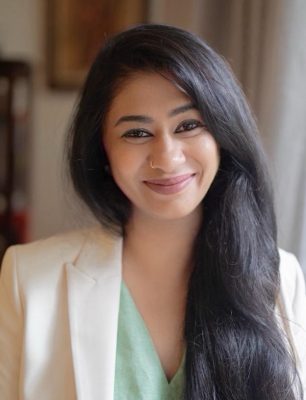 In 2014, Shankar immigrated from India to pursue a master’s degree in Clinical Mental Health Counseling at Syracuse University School of Education, before taking a Ph.D. in Human Development and Family Science (with a specialization in Couple and Family Therapy) from Virginia Tech.
Among her publications, Shankar is the author of the Handbook of Disability-Affirmative Systemic Therapy: Effective Clinical Care with Disabled Clients and their Families (Routledge, 2025). She notes that, “This handbook is one of the first comprehensive texts to center disability-affirmative systemic therapy, integrating clinical theory, family systems approaches, supervision, accessible program design, and contributions from leading practitioners and scholars.”
The handbook, explains Shankar, aims to fill a longstanding gap in the field and support the training of clinicians who are equipped to work competently, ethically, and relationally with disabled clients and their families.
“Outside of work,” she writes, “I enjoy cooking for friends and family, gaming, reading, and catching up with loved ones back home. I also love writing and have been making space again for this long-lost hobby.”
Describe your current role and its responsibilities.
My work centers on research, training, writing, and speaking focused on increasing both infrastructural and attitudinal accessibility within therapy spaces for disabled individuals and their families.
Recently, I wrote, edited, and published one of the first clinical handbooks as a practical intervention to help narrow this gap and translate accessibility principles into everyday practice.
In addition, I founded and lead a private practice in the San Francisco Bay Area, where I provide therapy to individuals, couples, and families. My clinical work is especially focused on immigrant communities and families navigating disability, with an emphasis on culturally responsive, disability-affirming care.
“SOE was one of the first programs I encountered that explicitly and seriously engaged with the intersection of disability and mental health at a time when these conversations were largely absent elsewhere.”
How did the School of Education prepare you for this role?
SOE was one of the first programs I encountered that explicitly and seriously engaged with the intersection of disability and mental health at a time when these conversations were largely absent elsewhere.
Syracuse was among the earliest institutions to offer a disability specialization within a graduate program—arguably one of the first in the country. That institutional commitment was reflected not only in the curriculum but in the depth of our classroom conversations and the literature we were encouraged to engage with.
To this day, Syracuse remains one of the few academic spaces I have experienced where disability-related perspectives were centered rather than treated as peripheral. I am deeply grateful for this foundation, as it fundamentally shaped how I understand accessibility, clinical responsibility, and justice, and it is what ultimately pushed me into this work.
What current trends do you see in your specialty and how are you addressing them?
One of the most important trends in my field is a growing recognition of the need to integrate disability justice and accessibility into mainstream mental health practice. This includes shifting from a purely medical model toward approaches that foreground lived experience, structural barriers, cultural context, and community-defined wellbeing.
There is also increasing attention to intersectionality: understanding how disability interacts with race, immigration status, socioeconomic position, gender, and other identities to shape access to care and clinical outcomes.
In my work, I address these trends in multiple ways. Through research and writing, I contribute to the evidence base on accessible, culturally responsive practices and help make disability-informed frameworks more visible and usable for clinicians. Through training and education, I actively build capacity in the field by equipping clinicians with both the conceptual language and practical skills to work accessibly with disabled and multiply marginalized communities.
In clinical practice, I strive to model what disability-affirming, trauma-informed, culturally attuned care looks like in real time, making adjustments based on ongoing feedback from clients and communities. Ultimately, I see my work as both responding to and helping push forward a broader shift toward justice-oriented mental health care.
Which professors stood out for you most as a student at SOE?
“SOE offers rigorous training grounded in equity, accessibility, and real-world impact.”
While I was fortunate to learn from many exceptional professors, Professor Jason Duffy stands out most clearly in my memory. As an immigrant student, his kindness and sense of humor made what could have been a difficult transition feel welcoming and human.
I still fondly recall a small but meaningful moment: after I shared in an assignment how my father used to draw little stick-figure ducks for me as a child when helping me with homework, Dr. Duffy drew a tiny stick-figure duck on my paper. It was such a simple gesture, yet it communicated care, attentiveness, and relational presence in a way that has stayed with me all these years.
Dr. Duffy, along with others at SOE, embodied what I now understand to be the mark of a strong clinician—not only technical skill and knowledge but compassion, curiosity, and the ability to truly see students and clients as whole people.
Make a pitch for SOE—why should a prospective student choose the School of Education?
SOE offers rigorous training grounded in equity, accessibility, and real-world impact. Rather than treating issues like disability, mental health, and culture as peripheral, SOE centers them in both its curriculum and conversation.
Just as importantly, SOE is a deeply relational learning environment. Faculty model technical and scholarly excellence, as well as compassion, curiosity, and care, preparing students to become thoughtful, justice-oriented professionals. It was a formative experience for me, and I would choose it all over again without hesitation!