
Enlisting in the US Navy reserves and receiving a scholarship to Syracuse University changed Roland Van Deusen’s ’67, G’75 life, having experienced an accident at birth, a period of homelessness as a very young person, and multiple schools.
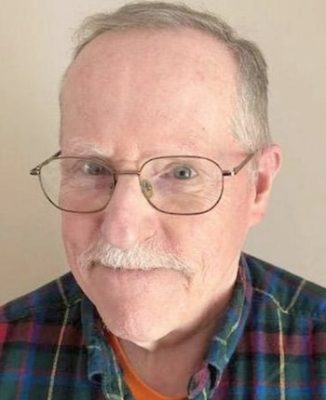 He took his bachelor’s degree in Sociology from Syracuse University in 1967 before serving for the Navy in missions in Iceland (at a radar site) and the Mediterranean. After this stint, Van Deusen worked in children’s services before switching to drug counseling: “Five years of casework experience made graduate school easier,” he says.
After earning his Master of Social Work in 1975, Van Deusen became a psychiatric social worker in a community mental health center for nine years before being promoted to supervising social worker.
The next 20 years were spent “behind bars as a drug counselor.” He oversaw treatment at the first US prison accredited for substance abuse assistance (Hale Creek Correctional Facility in Johnstown, NY) and then at the world’s largest substance abuse counseling facility (Cape Vincent (NY) Correctional Facility).
Although long retired from professional work, at 80 years old Van Deusen continues to serve, volunteering for the US Department of Veterans Affairs’ new suicide prevention initiative.
What is your fondest memory from your time at Syracuse University and the School of Social Work?
University-wide, I was one of the student organizers of a campus civil rights demonstration, which was covered nationally by ABC, NBC, and CBS.
My fondest School of Social Work school memory? There are two: earning a National Institute of Mental Health fellowship, based on my first semester’s grades. And the only comprehensive exam all social work master’s degree students took back then was “Human Behavior and Social Environment.” I scored in the top 5%.
What is something from your career that you are most proud about?
During my six years as a senior counselor, I helped send about 4,000 inmates to work release, the most in the department up to that date.
These inmates were minimum security, going out to legal jobs in their hometown and attending a 12 step-type support group. They were drug tested upon return. Two months after release, our first group was 88% successful: no drug use, no new crime, no absconding from program.
What is the biggest change you have seen in social work during your lifetime?
I spent 20 years in drug counseling for incarcerated clients. There are few other M.S.W. graduates in the same field. I’m convinced that my success is linked to my social work education, prior experience, and learned social work values. If only the rest of the prison/industrial complex had these social work values.
What gives you hope?
At 80 years old, I am a leading volunteer for the VA’s new suicide prevention initiative, running a veteran’s support group, cross-training others in this effort, sharing my published works in Psychiatric Times and Combat Stress; appearing on a national cable news network; and helping out the VA person in charge of suicide prevention for major midwestern city.
What advice do you have for an SOE student just starting on their career path?
After my bachelor’s degree at Syracuse, I served honorably in the Navy overseas during wartime and then worked as a county caseworker and drug counselor for five years before returning to graduate school.
This work gave me a lot more confidence and experience than sitting in a classroom for six straight years. This was a factor in my GRE score being in the 88th percentile, years after my B.A.