
Counseling and Counselor Education, Ph.D.

Shape the future of counseling through research, practice, and supervision.

Syracuse’s Ph.D. in Counseling and Counselor Education is designed for counseling professionals who want to supervise, teach, research, and lead. Graduates leave equipped to conduct essential research, train and supervise the next generation of counselors, and advance inclusion and equity within the profession.

This rigorous preparation meets real demand. Postsecondary teaching positions are projected to grow 7% through 2034 nationally, and Syracuse’s own doctoral graduates report a 100% employment rate within six months of completing the degree.

Application Deadline: November 1 | Interviews December 3 | More admissions information
Join us for an info session September 21 or October 9!

Why Counseling and Counselor Education at Syracuse?

Syracuse’s doctoral program is accredited by the Council for Accreditation of Counseling and Related Educational Programs (CACREP), which means it is built around the standards and professional identity of counselor education specifically, producing graduates whose training is grounded in the field they are entering.

  • A research apprenticeship model. First-year doctoral students join the research of a faculty member or initiate their own inquiry of research under faculty tutelage, building toward a scientist-practitioner mindset well before the dissertation begins. Training in both quantitative and qualitative designs means graduates leave conversant in the full range of counseling research.
  • An active research community. Syracuse is an R1 research university and doctoral students have genuine access to faculty scholarship, often joining faculty as co-authors and conference presenters. Current faculty research topics include social determinants of mental health, trauma-informed and feminist approaches to counselor education, the social justice development of mental health professionals, marginalized youth, belonging and resilience in college students, and multicultural competence and advocacy in counselor preparation.
  • Counseling supervision as a specialization. Students gain the knowledge and skills to train and supervise counselors and counselors-in-training and to teach supervision, as part of your direct preparation for clinical director and supervisor roles.
  • Teaching experience before you are on the job market. Through the Future Professoriate Program (FPP), doctoral students build an instructional record—and receive a teaching certificate—by co-teaching with faculty and fellow doctoral students, guest lecturing, and taking on independent instruction.
  • A foundation of inclusion, equity, and social justice. This program is built around preparing counselor educators who can confront disparities students and clients face, including access to care, representation within the profession, and institutionalized discrimination that shapes disparities in social, academic, and career opportunities.

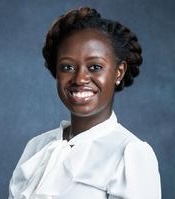
shana gelin headshot
“The Counseling and Human Services program was essential to my growth as a counselor educator. It not only prepared me to become a competent counselor educator, it also instilled in me the confidence, passion, and skills to make a meaningful impact in the field. I am incredibly grateful for the foundation this program provided and proud to carry its influence into my work today.”
Shana Gelin G’22

Who Should Apply?

This program is built for counselors who are interested in academia and/or serving in counseling leadership roles. Applicants hold a master’s degree in counseling (preferably from a CACREP-accredited program). Those without a CACREP-accredited master’s degree should expect some additional coursework built into the doctoral program of study.

Beyond academics, faculty members seek evidence of scholarship promise, a professional disposition, high standards of professionalism, critical thinking skills, leadership, advocacy, and perseverance. In short, this is a program for counseling professionals ready to shape the field, not just practice within it.

Program at a Glance

For the doctorate in Counseling and Counselor Preparation, students complete a minimum of 60 credits beyond their master’s degree in counseling. Of these, 9-12 credits may be applied toward completion of the dissertation.

  • A highest-standard curriculum spanning theory, supervision, and professional identity: Coursework follows rigorous CACREP standards, covering advanced counseling theory and systems consultation, counseling supervision, instructional theory for counselor education, advanced research methodology and assessment, technology in counseling practice, and leadership and advocacy. Courses include Addressing Systemic Racism in Education, Ecological Issues in Counselor Education and Supervision, and Professional Issues, and the Advanced Practicum and Internship.
  • A structured research experience from year one: The Doctoral Research Seminar brings first-year students into the research apprenticeships and dissertation work of advanced doctoral students, while giving advanced students a setting to develop research topics and proposals.
  • A cognate built around your goals: Every student completes a 9-to-12-credit specialized area of study (“cognate”) chosen with their advisor in counseling or adjacent fields. The cognate enhances students’ ability to develop specialized expertise and allows them to distinguish themselves as they develop their professional identities.
  • Structured research sequence: Students complete a research sequence with either a qualitative or quantitative emphasis, along with one course in an alternative approach, and are encouraged to pursue further research training. A required research apprenticeship gives students hands-on experience within a course or as an independent study.
  • Supervised clinical experience in a college context: Internships and assistantships give students supervised clinical experience typically within a college counseling context, working with students who present a wide range of developmental and mental health concerns.

More information on academic requirements available in the Syracuse University Course Catalog.

What Our Graduates Do

Graduates of the Counseling and Counselor Education doctoral program report a consistently excellent employment rate within six months of completing the degree. Graduates go on to serve as:
  • Faculty in counseling and counselor education programs
  • Clinicians and supervisors at university counseling centers, agencies, and schools
  • Directors of counseling and behavioral medicine programs
  • Counselors and leaders within hospitals, community agencies, and the Veterans Administration
  • Leaders within K-12 schools and districts
  • Private practitioners
  • Some graduates seek additional credentialing, including as an Approved Clinical Supervisor, Mental Health Facilitator, or Registered Play Therapist.